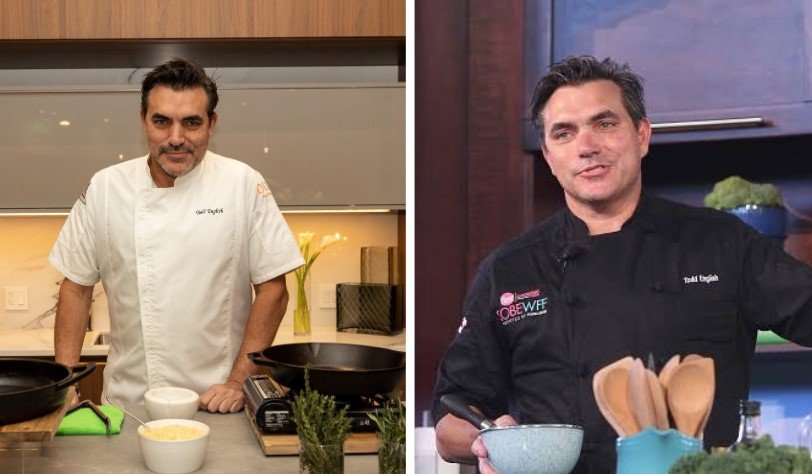
Todd English is an American chef and restaurateur who built his reputation by combining Mediterranean flavors with an energetic, modern approach to cooking. His career spans professional kitchens, restaurant ownership, television appearances, cookbooks, and culinary ventures that introduced his style to a broad audience. He became widely recognized for Olives, the restaurant that helped establish his name in American fine dining. Rather than focusing exclusively on traditional French techniques, English developed a cooking philosophy influenced by Italian ingredients, regional traditions, and bold combinations of flavor. His work also reflects the business side of the restaurant industry, where creativity must meet consistency, customer expectations, and financial realities. From his early training as a chef to his rise as a prominent culinary personality, English’s story offers insight into the opportunities and challenges of building a public career around food.
Quick Bio
| Detail | Information |
|---|---|
| Full Name | Todd English |
| Profession | Chef, restaurateur, cookbook author, and television personality |
| Nationality | American |
| Birth Date | August 29, 1960 |
| Birthplace | Amarillo, Texas, United States |
| Known For | Olives restaurant and Mediterranean-inspired cuisine |
| Culinary Style | Mediterranean, particularly Italian-inspired cooking |
| Education | Culinary Institute of America |
| Famous Connection | His professional identity as an American chef and restaurateur |
| Restaurant Career | Founder of the Olives restaurant concept and other culinary ventures |
| Children | He has children; detailed current family information should be treated cautiously |
| Current/Public Status | Known for his culinary work, restaurant ventures, and media appearances |
Todd English’s Early Interest in Cooking
Todd English began working in professional kitchens as a teenager, developing practical experience long before he became a nationally recognized chef. His early exposure to restaurant work introduced him to the discipline, pace, and coordination required to deliver a consistent dining experience.
He later attended the Culinary Institute of America, graduating with honors in 1982. The training gave him a stronger foundation in professional cooking, kitchen management, and the techniques needed to develop his own culinary identity.
English continued his education through hands-on experience in established restaurants. He worked at La Côte Basque in New York under chef Jean-Jacques Rachou before traveling to Italy for apprenticeships at respected restaurants, including Dal Pescatore and Paracucchi.
These experiences influenced his approach to ingredients, preparation, and presentation. Italian regional cooking, Mediterranean flavors, and the importance of high-quality ingredients became recurring elements of his work.
His early career demonstrates how formal culinary education and practical experience can complement each other. Rather than relying on a single cooking tradition, English combined techniques learned in professional kitchens with influences drawn from his Italian heritage.
How Olives Established Todd English’s Reputation
A defining milestone in his restaurant career
In 1989, English opened Olives in Charlestown, Massachusetts. The restaurant began as a relatively small operation, but its approach to Mediterranean-inspired cooking helped it attract attention beyond its immediate neighborhood.
Olives emphasized rustic Mediterranean flavors presented with the creativity and polish associated with upscale dining. Its menus incorporated Italian influences, carefully prepared ingredients, and dishes designed to deliver strong flavors without losing sight of the food itself.
The restaurant received critical recognition, including a Best New Restaurant distinction from Boston Magazine. Its success helped establish English as an ambitious chef with the ability to turn a personal cooking philosophy into a recognizable restaurant concept.
Olives also became the foundation for his broader business ambitions. The concept expanded to other locations, including prominent hospitality destinations, bringing his name to diners who might never have visited the original Massachusetts restaurant.
The brand’s growth illustrates an important part of English’s career: he did not limit his ambitions to running a single kitchen. He developed a restaurant identity that could be adapted to different markets while retaining its Mediterranean influence.
The original restaurant is now part of his professional history rather than an indication that every Olives location remains open. Restaurant openings, closures, and ownership arrangements have changed over time, so the status of individual locations should be considered separately.
The Culinary Philosophy Behind His Food
English’s cooking draws heavily on Mediterranean traditions, especially Italian regional cuisine. His style combines familiar ingredients with modern presentation, allowing dishes to feel approachable while retaining the character of a restaurant-led culinary experience.
Olive oil, fresh herbs, seafood, seasonal produce, grilled ingredients, and handmade pasta are all associated with the wider culinary traditions that have influenced his work. The exact menu varies by restaurant, but his overall approach emphasizes flavor, texture, and the quality of ingredients.
His time in Italy helped him understand how regional cooking reflects local products and traditions. Italian cuisine is not a single uniform style; its dishes differ across regions, shaped by geography, history, and agricultural practices. That variety offered English a broad range of ideas to draw upon.
Rather than treating Mediterranean cooking as a rigid formula, he has used it as a framework for experimentation. His restaurant concepts have included both refined dining experiences and more casual formats, demonstrating that the same culinary influences can support different customer expectations.
This flexibility has been central to his public identity. English is associated not only with individual dishes but also with a recognizable approach to restaurant design, menu development, and the overall dining experience.
From Fine Dining to Figs and Other Restaurant Concepts
After establishing Olives, English developed additional restaurant concepts that explored different parts of the dining market.
Figs, which opened in Boston in 1992, offered a more casual alternative. The concept became associated with pizza, pasta, and approachable Italian-inspired food. It showed that English could adapt his culinary identity to a setting where customers wanted relaxed meals rather than a formal fine-dining experience.
He later became associated with a range of other ventures, including Tuscany, KingFish Hall, blueZoo, and the Todd English Food Hall. These projects covered different cuisines, service styles, and hospitality environments.
Some concepts focused on seafood, while others emphasized Italian cooking or broader international influences. The variety reflects the commercial opportunities available to a chef who has developed a recognizable name.
However, a restaurant bearing a chef’s name does not necessarily remain open indefinitely. The hospitality industry is affected by rent, staffing, food costs, investor relationships, customer demand, and changing dining habits. English’s portfolio has included both ventures that received significant attention and businesses that eventually closed or changed direction.
His career therefore offers a more realistic picture of restaurant entrepreneurship than a simple story of uninterrupted expansion. Building a successful concept requires culinary creativity, but sustaining it requires operational discipline and adaptability.
Todd English’s Work in Hotels and Food Halls
English has also developed restaurant concepts for major hotels, resorts, and other hospitality destinations. These settings provide access to travelers and visitors while requiring chefs to adapt their operations to larger organizations and different customer groups.
In 2010, he introduced the Todd English Food Hall at New York City’s Plaza Hotel. The concept drew inspiration from European food halls, where diners can encounter different dishes and styles within a shared setting.
The food hall format differs from a traditional restaurant built around one menu and one dining room. It offers a broader selection of food experiences, giving visitors more flexibility in how they choose and enjoy their meals.
English’s work in hospitality has also extended internationally. His restaurant concepts have appeared in destinations outside the United States, including the Middle East and Asia. Such projects depend on adapting menus and operations to local markets while maintaining the identity associated with the chef’s name.
These ventures illustrate the difference between being a chef and building a culinary brand. English’s role has involved more than preparing recipes; it has also included concept development, menu direction, collaboration, and the broader business of food service.
Who Is Todd English as a Television Personality?
Television helped bring English’s culinary work to audiences who might not have encountered his restaurants in person. His on-screen appearances have included cooking demonstrations, interviews, and participation in food-focused programming.
One of his major television projects was Food Trip with Todd English, a PBS series that explored food and culinary traditions through travel. The program connected cooking with the places, ingredients, and cultural influences behind different dishes.
The series received recognition in the food-media industry, including James Beard Awards. Its format suited English’s interests in international cuisine and regional cooking, allowing him to present food as part of a broader cultural experience.
He has also appeared on well-known American television programs and participated in culinary entertainment, including cooking competitions and food-related events. These appearances helped establish his identity beyond the restaurant kitchen.
Television exposure can be valuable for a restaurateur because it introduces a chef’s personality and culinary philosophy to a much wider audience. For English, it became another way to connect his name with food, travel, and experimentation.
His media work has complemented his restaurant career rather than replacing it. The kitchen and the dining room remain central to his professional reputation, while television has expanded the ways in which audiences can encounter his work.
Todd English’s Cookbooks and Approach to Home Cooking
Cookbooks form another important part of English’s career. Through them, he has shared recipes and culinary ideas with readers who want to recreate restaurant-inspired food in their own kitchens.
His published titles include The Olives Table, The Figs Table, The Olives Dessert Table, and Cooking in Everyday English. The books reflect different aspects of his culinary identity, from restaurant dishes and desserts to recipes intended for everyday home cooking.
Cookbooks also allow chefs to communicate more than ingredient lists. They can explain preparation techniques, offer guidance on flavor combinations, and help readers understand how to approach a dish rather than simply follow instructions.
English’s books connect his restaurant experience with the practical needs of home cooks. While a professional kitchen may have specialized equipment and a team of trained staff, home cooking requires methods that work with ordinary tools, available ingredients, and limited preparation time.
He has also expanded into culinary products, including cookware and kitchen appliances. These projects extend his professional brand into the home, where customers can engage with his approach to food without visiting a restaurant.
His publishing career reinforces the breadth of his work. English has used restaurants, television, and books as different ways to communicate a shared interest in flavor, technique, and the pleasure of eating.
Awards and Recognition in the Culinary Industry
English’s achievements have earned recognition from major organizations and publications within the restaurant industry.
The James Beard Foundation named him National Rising Star Chef in 1991 and Best Chef in the Northeast in 1994. These awards helped establish his standing during the early years of his restaurant career.
Other recognition followed. Nation’s Restaurant News included him among its Top 50 Tastemakers in 1999, while Bon Appétit named him Restaurateur of the Year in 2001.
Such distinctions reflect different dimensions of culinary achievement. Recognition for cooking acknowledges skill and creativity, while awards for restaurateurs consider the broader work involved in developing successful dining concepts.
His public profile also grew through media appearances and restaurant expansion. By combining culinary awards with a recognizable brand, English became one of the chefs associated with the rise of celebrity-driven restaurant culture in the United States.
Awards do not guarantee that every business venture will succeed, and they do not remove the practical challenges of running restaurants. Nevertheless, the recognition he received during his career provides a documented measure of his influence within the American food industry.
Todd English’s Recent Restaurant Ventures
English’s restaurant career has continued to evolve as he explores new partnerships and dining concepts. In October 2024, he opened Lula’s by Todd English in Lake Worth Beach, Florida, with a menu influenced by Italian cooking and Tuscan flavors. The restaurant closed in 2025 after a relatively short run, illustrating the challenges involved in maintaining a new dining business.
His work has also extended into new hospitality partnerships. In December 2025, industry announcements described a collaboration with chef and entrepreneur Olivia Ostrow to develop French English, a proposed international restaurant concept combining French-Mediterranean influences with a contemporary approach to kosher dining.
The partnership reflects English’s continued interest in developing food concepts for different audiences and markets. Its announced plans included potential expansion into several international cities, although proposed locations should not be confused with confirmed operating restaurants.
English has also remained associated with established restaurant concepts. Tuscany at Mohegan Sun reopened after renovations, with an updated dining environment and menu that continued its Italian-inspired approach.
These developments show how his professional work has moved beyond the original Olives concept. His career now includes a mix of restaurant development, culinary partnerships, hospitality projects, and brand-building initiatives.
Personal Life and Family Background
Todd English’s public identity is closely tied to his professional achievements, and he generally receives more attention for his restaurants and cooking than for details of his private life.
He was previously married to Olivia Disch, and they have children together. English has occasionally discussed family life in the context of his work, particularly when describing the experiences and priorities that influence his approach to food and hospitality.
However, details about his family members’ private lives should not be treated as public information unless they have been reliably documented. His children have their own lives outside his restaurant career, and there is little value in speculating about personal matters that have not been publicly established.
English’s professional biography provides a clearer record of his development: culinary education, apprenticeships, restaurant openings, industry recognition, television appearances, and publishing projects.
Keeping that distinction matters when considering the career of a public figure. His accomplishments can be evaluated through his work without relying on unverified claims about his relationships or family circumstances.
Todd English’s Net Worth and Financial Success
Todd English’s exact current net worth is not reliably established through authoritative public financial disclosures. Figures published by celebrity wealth websites should therefore be treated as estimates rather than verified facts.
His career has included several potential sources of income, including restaurant ownership and partnerships, culinary consulting, television work, cookbook sales, and branded kitchen products. However, the revenue generated by a restaurant or hospitality group does not automatically represent the chef’s personal earnings.
Restaurant finances can be particularly complicated. Operating costs, leases, investor arrangements, staffing, supplier payments, and business liabilities all affect profitability. A successful restaurant brand may generate substantial sales without providing a clear picture of its owner’s personal wealth.
English’s long career and international projects demonstrate significant professional activity, but they do not establish a precise personal fortune. Without reliable financial records, a specific net worth figure would be misleading.
Why Todd English Remains a Recognizable Name in American Food Culture
English’s influence comes from the combination of his culinary style and his ability to develop restaurant concepts for different audiences. Olives introduced diners to his interpretation of Mediterranean cooking, while Figs offered a more casual expression of his Italian-inspired approach.
His work in hotels and food halls expanded that identity into hospitality environments where customers expect convenience, variety, and a distinctive dining experience. Television and cookbooks extended his reach even further, allowing him to connect with audiences outside the restaurant industry.
His career has also included business setbacks and restaurant closures. Those experiences are part of the broader reality of hospitality, where even established names must respond to changing markets, operating costs, and customer expectations.
English’s professional story is therefore not simply about awards or restaurant openings. It is about the evolution of a chef into a wider culinary entrepreneur, balancing food, media, branding, and business development over several decades.
Conclusion
Todd English has built a multifaceted career as an American chef, restaurateur, cookbook author, and television personality. His early training at the Culinary Institute of America and experience in respected kitchens helped shape the Mediterranean-inspired style that became central to his work.
The opening of Olives in 1989 marked a major turning point, providing the foundation for further restaurants and a recognizable culinary brand. His subsequent ventures, television appearances, cookbooks, and hospitality partnerships expanded his influence beyond a single dining room.
Although not every restaurant venture has lasted, English has continued to explore new concepts and opportunities in the food industry. His career illustrates both the creative possibilities and the business challenges of building a lasting name in American hospitality.
Ultimately, Todd English’s story is defined by his willingness to move between professional cooking, restaurant development, publishing, and media. These different pursuits have helped establish him as a recognizable figure in contemporary American culinary culture.
FAQs
Who is Todd English?
Todd English is an American chef, restaurateur, cookbook author, and television personality. He became widely recognized through his Mediterranean-inspired cooking and the Olives restaurant concept.
What is Todd English famous for?
He is particularly associated with Olives, which opened in Charlestown, Massachusetts, in 1989. He is also known for Figs, his television work, his cookbooks, and his restaurant ventures in hotels and other hospitality destinations.
3What awards has Todd English won?
English has received multiple culinary honors, including the James Beard Foundation’s National Rising Star Chef award in 1991 and Best Chef in the Northeast in 1994. These awards helped establish his reputation during the early stages of his career.
What type of food does Todd English cook?
His culinary style draws heavily on Mediterranean traditions, particularly Italian regional cuisine. His restaurant menus have included Italian-inspired dishes, seafood, pizza, pasta, and creative interpretations of familiar ingredients.
Is Todd English still involved in the restaurant industry?
Yes. Recent announcements have associated him with restaurant partnerships and hospitality projects, including a proposed collaboration with Olivia Ostrow. Individual restaurants and planned locations can change, so their current operating status should be considered separately.
Has Todd English written any cookbooks?
Yes. His published works include The Olives Table, The Figs Table, The Olives Dessert Table, and Cooking in Everyday English. These books bring elements of his restaurant experience to home cooks.
What is Todd English’s net worth?
Todd English’s verified current net worth is not publicly established through authoritative financial disclosures. Although his career includes restaurants, television appearances, cookbooks, and business partnerships, those activities do not provide enough information to calculate his personal wealth reliably.
For More Visit Quickly Time