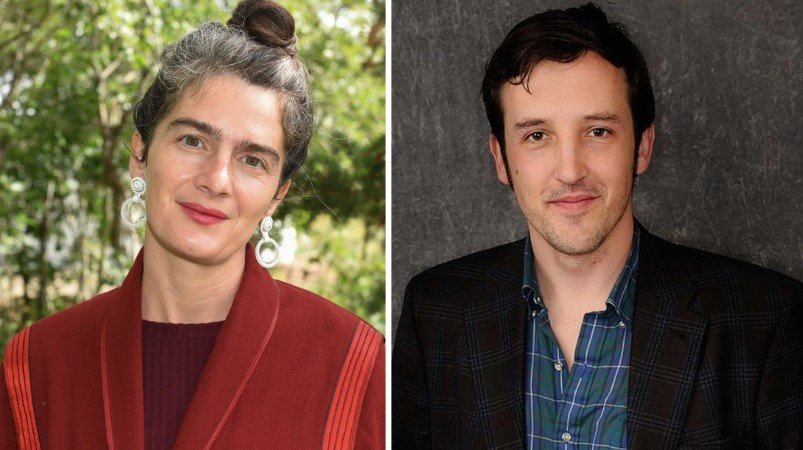
Chris Dapkins is an American cinematographer and filmmaker whose work in independent cinema has established his professional identity beyond celebrity headlines. He is also widely recognized as the longtime partner of actress Gaby Hoffmann, known for her performances in independent films and acclaimed television series. Although Hoffmann regularly appears in the public eye, Dapkins has built his career primarily behind the camera, contributing to documentaries and feature films. His filmmaking credits include The Swell Season, My Brooklyn, and several other projects that explore personal stories, culture, and society. The couple welcomed their daughter, Rosemary, in 2014, marking an important milestone in their family life. Despite public interest in their relationship, they have generally kept their personal affairs away from excessive media attention. Exploring Dapkins’ career, creative achievements, and relationship with Hoffmann reveals a filmmaker whose own work deserves attention.
Quick Bio
| Detail | Information |
|---|---|
| Full Name | Chris Dapkins |
| Alternative Name | Christopher Dapkins |
| Known For | Cinematography, documentary filmmaking, and directing |
| Famous Connection | Gaby Hoffmann |
| Relationship | Longtime partner |
| Profession | Cinematographer and filmmaker |
| Birth Date | Not reliably documented in authoritative public sources |
| Birthplace | Not reliably documented in authoritative public sources |
| Nationality | Not conclusively established in authoritative public sources |
| Partner | Gaby Hoffmann |
| Children | One publicly documented daughter, Rosemary Dapkins |
| Education | Not reliably documented in authoritative public sources |
| Notable Work | The Swell Season, My Brooklyn, Pavilion, and Memphis |
| Other Professional Experience | Documentary camera work and international filming assignments |
| Net Worth | No verified current estimate is publicly available |
| Current Public Profile | Maintains a relatively private life while pursuing filmmaking work |
Who Is Chris Dapkins?
Chris Dapkins is a cinematographer and documentary filmmaker whose professional work spans independent features, documentaries, and directing. His career reflects a filmmaking approach centered on visual storytelling rather than the public recognition associated with acting.
Cinematographers play a crucial role in determining how a film looks and feels. They collaborate with directors to shape lighting, framing, camera movement, composition, and the overall visual atmosphere. In documentary filmmaking, these responsibilities can be particularly demanding because filmmakers often work with real people, changing environments, and unpredictable situations.
Dapkins has contributed to productions exploring subjects ranging from music and urban development to cultural figures and social issues. His work on The Swell Season is particularly notable because he served as both a cinematographer and a co-director.
Outside his professional credits, Dapkins is known for his relationship with Gaby Hoffmann. However, his identity is not limited to being the partner of an actress. His documented filmmaking work provides a separate professional story, even though detailed information about his upbringing and personal background remains limited.
Early Life and Background
Compared with actors and other highly visible entertainment figures, Chris Dapkins has shared relatively little biographical information publicly. His early childhood, family background, and formative experiences are not comprehensively documented in authoritative public sources.
This limited information makes it difficult to construct a detailed account of his upbringing without relying on unsupported online claims. His professional film credits, however, provide a clearer picture of his interests and experience.
Dapkins developed a career in cinematography and documentary production, fields that require both technical ability and an understanding of how images communicate information. Documentary filmmakers frequently work in unfamiliar environments, observe real-life situations, and make visual decisions that help audiences understand complicated subjects.
His subsequent work across different productions indicates experience in several aspects of filmmaking. Rather than presenting an unverified account of his childhood, his career offers the most reliable starting point for understanding his development as a creative professional.
Education and the Beginnings of His Filmmaking Career
Detailed records of Dapkins’ formal education are not readily available in authoritative public sources. Consequently, it is not possible to establish with confidence which schools he attended or the exact training that led him into cinematography.
His professional history does offer evidence of an early interest in independent filmmaking. In 2004, he participated in the Tribeca Film Institute’s Filmmaker Exchange, a program that brought filmmakers together for a master class in Marrakech with directors Abbas Kiarostami and Martin Scorsese.
The experience is a notable part of his publicly documented professional background because it placed him in a setting focused on filmmaking craft and international creative exchange.
Dapkins later worked on short films and documentary productions before becoming involved in feature-length projects. These opportunities allowed him to develop practical experience with camera work, visual composition, and the collaborative nature of film production.
Although the details of his education remain unclear, his documented professional activities demonstrate sustained involvement in the independent film community.
Building a Career in Cinematography
Cinematography has been central to Dapkins’ professional identity. His credits include work as a director of photography on documentaries and narrative films, with projects examining people, places, and cultural subjects.
A director of photography is responsible for translating a production’s visual intentions into practical camera and lighting decisions. The role involves close collaboration with directors, production designers, camera operators, and other members of the crew.
Documentary cinematography often requires additional flexibility. Unlike scripted productions, documentaries may depend on access to real events, interviews, and situations that cannot be recreated. The cinematographer must respond to those circumstances while maintaining visual consistency.
Dapkins has worked across both documentary and fictional projects, giving his filmography a broader scope than a single genre. His credits include Knife Point, Pavilion, Memphis, and My Brooklyn, among other productions.
These projects help establish him as a working filmmaker in his own right. Although individual credits do not reveal his complete artistic process, they demonstrate professional experience across a range of subjects and production environments.
The Swell Season: A Major Documentary Credit
One of the most significant projects associated with Chris Dapkins is The Swell Season, a documentary released in 2011.
The film follows musicians Glen Hansard and Markéta Irglová after the international attention surrounding Once, the independent musical drama in which they starred. Rather than simply celebrating their success, the documentary examines the complicated relationship between artistic achievement, personal expectations, and the demands of public recognition.
Dapkins co-directed the film with Nick August-Perna and Carlo Mirabella-Davis. He also served as its cinematographer, giving him responsibilities on both the creative and visual sides of the production.
The combination of directing and cinematography is significant. Directing involves shaping a documentary’s overall approach, while cinematography determines how its subjects and environments are visually presented. Performing both roles can create a close relationship between a film’s storytelling choices and its visual style.
The Swell Season therefore represents an important example of Dapkins’ ability to contribute beyond a technical camera role. It also illustrates his involvement in independent documentary filmmaking that explores the experiences of artists navigating professional and personal change.
Exploring Urban Change Through My Brooklyn
Another notable project in Dapkins’ filmography is My Brooklyn, a documentary directed by Kelly Anderson and released in 2012.
The film investigates gentrification in Brooklyn, New York, examining how commercial development, changes in property values, and neighborhood transformation affect established communities.
Dapkins worked as a cinematographer on the project. His role contributed to the film’s presentation of the physical spaces and communities at the center of its story.
Documentaries about urban development depend heavily on visual context. Streets, storefronts, buildings, and residential areas can illustrate changes that statistics alone may not communicate. Cinematography helps connect broader economic and political questions to the places where people live and work.
My Brooklyn is a useful example of the socially engaged subjects found in Dapkins’ professional history. The film focuses on a real-world issue rather than celebrity culture, placing his work within a documentary tradition that uses visual storytelling to examine changes in society.
The project also demonstrates how cinematographers contribute to films whose subjects extend beyond the entertainment industry itself.
Working Across Different Film Genres
Dapkins’ career has not been limited to a single type of production. His credits include documentaries, independent narrative films, and projects involving cultural personalities.
Among his cinematography credits are Pavilion, Memphis, and Knife Point. These projects differ in subject and style, illustrating the range of production environments in which he has worked.
He has also been associated with documentaries such as Birders: The Central Park Effect, Citizen Jane: Battle for the City, and Itzhak. Each explores a different subject, from urban wildlife to architecture, cities, and music.
Working across these projects requires a cinematographer to adapt to the demands of the material. A documentary about a musician may prioritize performance, interviews, and intimate observation, while a narrative film may require more carefully planned camera movements and controlled lighting.
Dapkins’ filmography shows that he has participated in productions with different visual and storytelling requirements. The available information does not establish a single defining style, but it does demonstrate a varied professional background.
From Cinematographer to Director
Although cinematography remains a central part of Dapkins’ career, he has also worked as a director.
His co-directing credit on The Swell Season is one example of this broader role. He was also involved in directing the short film Be the Change You Want to See, released in 2016.
Directing requires a different set of responsibilities from cinematography. A director helps determine how a story unfolds, how scenes are approached, and how the various creative contributions fit together. In documentary production, the role can also involve decisions about interviews, access, narrative structure, and the ethical presentation of real people.
Dapkins’ experience in cinematography provides a practical foundation for this work, although his specific directing methods and creative influences are not extensively documented.
His movement between these roles reflects a broader pattern within independent cinema, where filmmakers may take on several responsibilities depending on the needs and resources of a production.
Rather than defining him exclusively as a camera professional, his directing credits show another dimension of his involvement in filmmaking.
Documentary Work Beyond Entertainment
Dapkins has also worked on documentaries that examine subjects beyond the conventional entertainment industry.
His credits include Recorder: The Marion Stokes Project, a documentary about Marion Stokes and her decades-long effort to record television broadcasts. The film considers the preservation of media and the significance of television archives as historical records.
He has also worked on Scotty and the Secret History of Hollywood, a documentary centered on Scotty Bowers and his recollections of Hollywood’s hidden social history.
These projects demonstrate his participation in documentary storytelling about cultural figures, historical material, and the relationship between public narratives and private experiences.
Such productions require filmmakers to work with archival material, interviews, and sometimes competing accounts of past events. Cinematography and visual presentation help connect those elements into a coherent viewing experience.
Dapkins’ involvement in these projects adds depth to his professional profile. His career includes work on documentaries concerned with how stories are remembered, preserved, and interpreted.
Who Is Gaby Hoffmann?
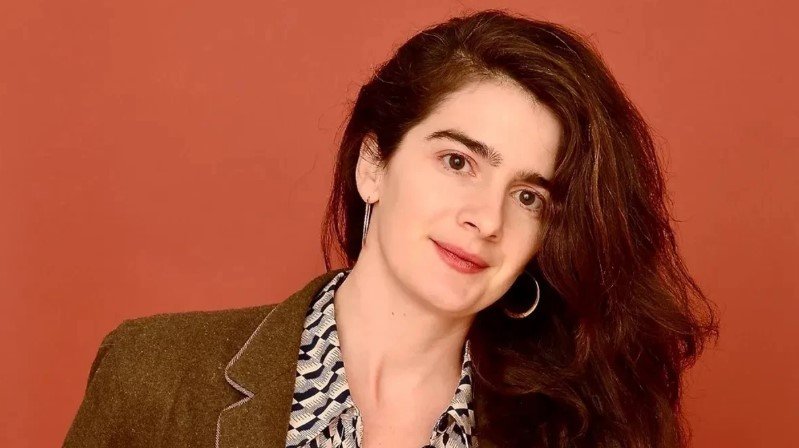
Gaby Hoffmann is an American actress who began working in film as a child and later established herself as a respected performer in independent cinema and television.
She appeared in films including Field of Dreams and Uncle Buck in 1989, followed by roles in Sleepless in Seattle, Now and Then, and Volcano. After taking time away from acting, she returned to the screen through independent projects that helped reestablish her professional presence.
Her later performances in Crystal Fairy & the Magical Cactus, Wild, Girls, and Transparent brought renewed critical attention. Her work on Transparent earned her Primetime Emmy Award nominations, while her performances in independent films reinforced her reputation for taking on distinctive roles.
Hoffmann has continued working across film and television, including the 2021 film C’mon C’mon. Her career has moved between mainstream productions and smaller projects, giving her a varied professional identity.
Her connection to Chris Dapkins is an important part of her personal life, but it does not define his entire career. Their relationship links two people who work in the creative industries while maintaining different levels of public visibility.
How Chris Dapkins and Gaby Hoffmann’s Relationship Became Public
Chris Dapkins and Gaby Hoffmann have been publicly identified as longtime partners. Their relationship received wider attention through interviews and profiles about Hoffmann, particularly as she returned to more active work in film and television.
A 2013 profile of Hoffmann discussed her personal life during a period when she was becoming increasingly visible in independent cinema. By 2014, news reports had confirmed that she was expecting her first child with Dapkins.
The couple’s relationship was therefore part of the public record before their daughter was born. Nevertheless, they have generally kept the details of how they met and the early development of their partnership private.
There is no need to invent a dramatic beginning or attribute particular motives to either person. What can be established is that they built a long-term relationship and later became parents while pursuing careers in the creative world.
Their relationship is often mentioned in coverage of Hoffmann because she is the more recognizable public figure. Dapkins, however, has continued to maintain his own professional identity through filmmaking.
Their Life Together and Shared Creative Background
One aspect of Dapkins and Hoffmann’s connection is their shared experience of working in the film industry. Hoffmann works primarily as an actress, while Dapkins has built his career through cinematography and documentary filmmaking.
These occupations involve different responsibilities, but both depend on collaboration with directors, producers, and other creative professionals. Their professional backgrounds place them within overlapping artistic environments, although the extent to which they collaborate on individual projects is not fully documented.
Hoffmann has spoken publicly about her priorities and the choices involved in balancing work with family life. In interviews, she has discussed motherhood and the importance of structuring her career around her personal circumstances.
It would be speculative to attribute her career decisions directly to Dapkins or to claim that he has influenced particular roles without clear evidence. Their relationship can be described through confirmed milestones rather than assumptions about how they make decisions privately.
What is publicly known is that their partnership has continued alongside their respective professional activities and their shared responsibility as parents.
Chris Dapkins and Gaby Hoffmann’s Daughter
Chris Dapkins and Gaby Hoffmann welcomed their daughter, Rosemary Dapkins, in November 2014.
The news was publicly reported in December of that year, when Hoffmann’s representatives confirmed the birth. Rosemary’s arrival marked a major milestone in the couple’s life together.
Hoffmann subsequently spoke in interviews about motherhood and its place in her life. In a 2016 Washington Post profile, she was described spending time with her young daughter while continuing to navigate professional commitments.
The article also noted Dapkins’ work as a cinematographer, illustrating how his production schedule could involve time away from home. However, isolated reports about work schedules do not establish the couple’s full parenting arrangements or how they divide responsibilities.
They have generally kept their daughter’s private life away from extensive public scrutiny. Beyond the confirmed information about her birth and parentage, detailed claims about her upbringing should not be presented as fact without reliable evidence.
Their approach to family privacy is consistent with Dapkins’ relatively low public profile and the limited personal information the couple shares.
Why Chris Dapkins Maintains a Low Public Profile
Dapkins’ comparatively limited public visibility reflects the nature of his profession as well as his personal approach to privacy. Unlike actors, cinematographers do not usually have to promote their own public image to the same extent as performers appearing on screen.
Much of his work takes place during production, where the focus is on the film rather than the individual behind the camera. Even when a project receives critical attention, audiences may remember its director or leading performers more readily than its cinematographer.
His connection to Hoffmann has increased interest in his personal background, but he has not become a constant presence in entertainment news. Public profiles primarily discuss his film credits, his relationship, and their daughter.
This limited visibility should not be interpreted as evidence that he has stopped working or withdrawn from filmmaking. It simply means that comprehensive information about his everyday life and current professional activities is not readily available.
A more accurate understanding of Dapkins comes from his documented projects rather than assumptions based on how often his name appears in the media.
Chris Dapkins’ Net Worth and Financial Background
Chris Dapkins’ current personal net worth has not been reliably established through authoritative public financial disclosures.
His career includes work as a cinematographer, director, and documentary filmmaker. These roles can involve different payment structures, depending on the production’s budget, the length of the assignment, the filmmaker’s responsibilities, and any contractual arrangements.
However, film credits do not reveal a person’s complete income history. They do not establish how much a filmmaker was paid, whether they received additional royalties, or what assets and financial obligations they may have.
Hoffmann’s earnings as an actress also cannot automatically be treated as Dapkins’ individual wealth. Even in a long-term partnership, each person’s financial position may differ, and reliable information about their private financial arrangements is not publicly established.
For these reasons, assigning Dapkins a specific net worth would be speculative. His professional filmography provides a more dependable account of his career than unsupported financial estimates circulated online.
What Is Known About Chris Dapkins Today?
Chris Dapkins remains a relatively private figure, and detailed information about his current projects and daily activities is limited.
His established filmography shows continued involvement in independent cinema and documentary production over the years. Projects such as The Swell Season, My Brooklyn, Pavilion, and Recorder: The Marion Stokes Project provide a record of his work across different subjects and production formats.
However, without a reliable recent announcement or direct interview, it would be inappropriate to claim that he is currently filming a particular project or working in a specific position.
His relationship with Hoffmann and their daughter remains part of his publicly documented personal background. The couple’s decision to maintain privacy means that their current routines and personal arrangements are not fully known.
For readers interested in following his career, official film credits and production announcements offer a more reliable way to identify new work than unsupported claims about his personal life.
Conclusion
Chris Dapkins is a cinematographer, documentary filmmaker, and director whose career has developed largely outside the public spotlight. His work on projects such as The Swell Season and My Brooklyn demonstrates his involvement in independent filmmaking, while additional credits reveal experience across documentary and narrative productions.
His longtime partnership with Gaby Hoffmann and their daughter, Rosemary, form an important part of his personal story. However, his professional identity extends beyond that relationship, with a filmography that reflects sustained work behind the camera.
Although details about his early life, education, finances, and current projects remain limited, his documented filmmaking contributions offer a meaningful understanding of his career. Chris Dapkins is best described as a filmmaker who has maintained a private personal life while working across several areas of independent cinema.
FAQs
1. Who is Chris Dapkins?
Chris Dapkins is an American cinematographer and filmmaker associated with independent movies and documentary projects. He is also publicly known as the longtime partner of actress Gaby Hoffmann.
2. Is Chris Dapkins married to Gaby Hoffmann?
Chris Dapkins is publicly described as Gaby Hoffmann’s longtime partner. Reliable public information does not clearly establish that they are legally married, so describing him as her partner rather than her husband is the more accurate wording.
3. What does Chris Dapkins do for a living?
Dapkins works in filmmaking, particularly cinematography and documentary production. He has also worked as a director, including as a co-director of The Swell Season.
4. Do Chris Dapkins and Gaby Hoffmann have children?
Yes. Chris Dapkins and Gaby Hoffmann have one publicly documented daughter, Rosemary Dapkins, who was born in November 2014.
5. What films has Chris Dapkins worked on?
His credits include The Swell Season, My Brooklyn, Pavilion, Memphis, and Recorder: The Marion Stokes Project. His work spans documentary filmmaking and independent narrative productions.
6. What is Chris Dapkins’ net worth?
Chris Dapkins’ current net worth has not been reliably established through authoritative public financial information. His film credits confirm his professional work but do not provide enough information to calculate his personal wealth.
7. Where is Chris Dapkins now?
Detailed information about Dapkins’ current location and professional activities is limited. He maintains a relatively private public profile, so specific claims about his recent projects should be confirmed through reliable film-industry information.
For More Visit Quickly Time